hATTR-PN overview
 Fact-checked by
 Hereditary transthyretin amyloidosis with polyneuropathy (hATTR-PN), also known as familial amyloid polyneuropathy (FAP), is a rare genetic disease characterized by damage to the peripheral nerves found outside the brain and spinal cord.
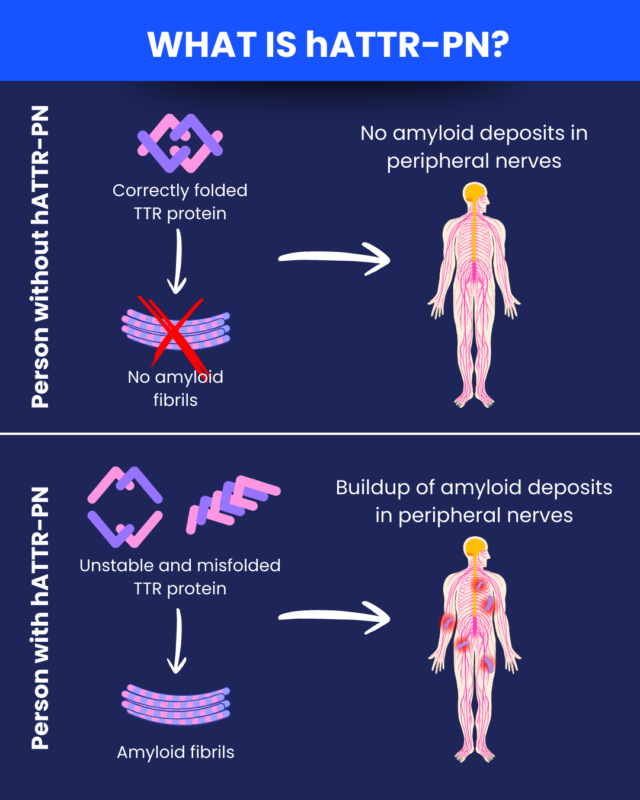
It is typically caused by inherited mutations in the TTR gene, resulting in structural problems with the protein transthyretin (TTR). The abnormal protein tends to misfold and form clumps called amyloid deposits that accumulate and damage nerves, as well as other tissues and organs.
Early diagnosis is crucial for initiating treatment promptly and preventing or delaying disease progression. While available disease-modifying therapies can slow or stop hATTR-PN progression, they can’t reverse existing damage. Other interventions, including liver transplant and therapies targeted at managing specific symptoms, may also play a role in hATTR-PN treatment.
What is hATTR-PN?
hATTR-PN is a type of hereditary TTR amyloidosis (hATTR or ATTRv), a group of diseases marked by the buildup of amyloid deposits in different parts of the body caused by TTR mutations that are typically passed from parents to children.
Different mutations in the TTR gene lead to distinct types of symptoms. hATTR-PN-causing mutations are primarily associated with peripheral nerve damage, while other mutations cause ATTRv with cardiomyopathy (ATTRv-CM), in which amyloid deposits mainly accumulate and damage the heart. Many people experience a combination of heart and nerve symptoms.
hATTR-PN is more common in certain areas, including parts of Japan, Portugal, and Sweden. Worldwide, there may be about 10,000 people living with hATTR-PN, although estimates vary broadly.
hATTR-PN may also be referred to as TTR familial amyloid polyneuropathy or ATTRv with polyneuropathy (ATTRv-PN).
Causes of hATTR-PN
TTR mutations are the root cause of hATTR-PN. The TTR gene contains the blueprint for making TTR, a protein that normally transports certain hormones and vitamins in the body. Disease-causing mutations cause TTR to become unstable, misfold, and clump together, forming amyloid fibrils that deposit in different tissues and organs.
Over time, the deposits damage peripheral nerves, the heart, or other organs. Different TTR mutations are associated with distinct hATTR-PN symptom profiles, progression rates, and levels of severity.
hATTR-PN is an autosomal dominant disorder, meaning that one mutated copy of the TTR gene (from one biological parent) is sufficient for a person to develop the disease. However, because the disease has incomplete penetrance, it’s possible for people to carry a mutated TTR gene copy without developing disease symptoms.
The autosomal dominant TTR gene mutation inheritance pattern means the biological child of someone with a mutation has a 50% chance of inheriting the mutation and being at risk of developing the disease.
Symptoms of hATTR-PN
hATTR-PN symptoms usually begin manifesting between the ages of 20 and 80, depending on the specific TTR mutation a person has. Symptoms associated with peripheral sensory-motor neuropathy, which happens when peripheral nerves responsible for controlling muscle movements and transmitting sensory information are damaged, are a key feature of hATTR-PN. These symptoms usually affect both sides of the body and may include:
- pain, tingling, or pricking sensations
- inability to sense temperature changes
- difficulty walking
- muscle weakness
Nerve damage in the autonomic nervous system, the part of the peripheral nervous system that controls involuntary bodily processes, can accompany symptoms of progressive peripheral neuropathy. Signs of autonomic dysfunction include gastrointestinal problems, erectile dysfunction, and dry eyes or mouth.
Carpal tunnel syndrome, which is caused by increased pressure on a nerve running through the wrist, is also common in people with hATTR-PN. Heart problems, including arrhythmias, may also occur in some patients due to the buildup of amyloid deposits in the heart.
hATTR-PN diagnosis
An hATTR-PN diagnosis is typically established through a combination of clinical examination and testing. Although a family history can help guide diagnosis, not everyone with hATTR-PN will have an apparent family history of the disease.
Genetic testing to identify disease-causing TTR mutations and a tissue biopsy to confirm the presence of amyloid deposits are key in the diagnostic process. Clinicians may use additional diagnostic tests to help identify the disease and assess its impact on a person’s health.
Genetic testing can also help determine if a person is a TTR mutation carrier before symptoms begin, particularly in families with a known history of hATTR-PN. People with an inherited mutation may be regularly monitored for the development of potential symptoms.
hATTR-PN treatment
While there isn’t yet a cure for TTR amyloidosis, various hATTR-PN treatments are available to ease symptoms.
Disease-modifying therapies aim to reduce further TTR amyloid buildup, potentially slowing or stopping disease progression. These include:
- Gene silencing therapies, which suppress TTR production. These include Amvuttra (vutrisiran), Onpattro (patisiran), and Wainua (eplontersen).
- TTR stabilizers, which stabilize TTR’s structure to prevent it from misfolding and forming toxic amyloid deposits. These include tafamidis meglumine, which is approved in some countries for the treatment of hATTR-PN.
Another treatment option that has become less common since the advent of newer therapies is a liver transplant, which can eliminate the source of defective TTR.
Additional interventions, including physiotherapy and occupational therapy, can help manage specific symptoms, potentially improving patients’ quality of life.
hATTR-PN life expectancy
Many factors can influence prognosis in hATTR-PN, so estimates of hATTR-PN life expectancy are highly variable. While some indicate that people with the disease live an average of about 10 to 15 years after symptoms appear, this can vary widely.
hATTR-PN generally progresses more rapidly than other types of peripheral neuropathy, but this can also vary depending on disease features.
Factors that can influence progression and life expectancy in hATTR-PN include:
- genetic variants
- age of onset
- treatment (including medication and liver transplant)
- extent of disease progression before treatment initiation
- the presence of symptoms involving the heart
Amyloidosis News Today is strictly a news and information website about the disease. It does not provide medical advice, diagnosis, or treatment. This content is not intended to be a substitute for professional medical advice, diagnosis, or treatment. Always seek the advice of your physician or other qualified health provider with any questions you may have regarding a medical condition. Never disregard professional medical advice or delay in seeking it because of something you have read on this website.