ATTR-CM causes
 Fact-checked by
 Transthyretin amyloid cardiomyopathy (ATTR-CM) is a form of heart disease that’s typically caused by genetic mutations or aging. Determining the root cause of ATTR-CM can help guide treatment decisions, understand prognosis, and determine if family members are at risk.
ATTR-CM is a type of amyloidosis, a group of diseases characterized by the accumulation of abnormal protein clumps, known as amyloid deposits, in tissues, which impairs organ function. In the case of ATTR-CM, the problematic protein is transthyretin (TTR), which is involved in transporting certain hormones and vitamins through the body.
Under normal circumstances, four TTR protein subunits, or monomers, bind together to form a stable structure called a tetramer. But in ATTR-CM, the tetramer structure is unstable, causing the monomers to separate. These lone monomers then tend to misfold and aggregate, forming amyloid deposits that accumulate in the heart, impairing its function and leading to symptoms of heart failure.
Types of ATTR-CM and their causes
There are two types of ATTR-CM:
- hereditary ATTR-CM, which is caused by genetic mutations
- wild-type ATTR-CM, which is typically age-related
There are differences between hereditary and wild-type ATTR-CM in terms of who is affected, symptom profiles, and prevalence.
Hereditary ATTR-CM
Hereditary ATTR-CM is the less common form of the disease. It is caused by mutations in the TTR gene, which contains instructions for cells to manufacture the TTR protein. These mutations drive the production of an abnormal protein that can’t form stable tetramers, ultimately leading to amyloid buildup in the heart and other tissues.
There are more than 150 known TTR mutations. Some are strongly linked to ATTR-CM, while others lead to a related condition called hereditary transthyretin amyloidosis with polyneuropathy that mainly affects nerves. Most TTR mutations, however, result in a combination of heart and nerve symptoms. The most common mutation causing ATTR-CM in the U.S. is called Val122Ile and is predominantly found in Black people.
Genetic mutations in ATTR-CM are inherited in an autosomal dominant manner, meaning that if a person inherits a mutated TTR gene from only one parent, they may be at risk of developing the disease. However, not everyone who inherits a TTR mutation develops symptoms.
Asymptomatic mutation carriers can still pass the mutation down to their children, who may or may not develop symptoms. The biological child of a person who has a mutated TTR gene copy has a 50% chance of inheriting the mutation.
Wild-type ATTR-CM
Wild-type ATTR-CM is the most common form of the disease. Unlike hereditary ATTR-CM, it is not associated with TTR gene mutations and the TTR protein produced by cells is initially normal.
Instead, tetramer instability and TTR protein misfolding typically develop with age. While the exact cause is not known, scientists believe that TTR tetramers naturally become less stable as the body ages, promoting the formation of amyloid deposits that accumulate in the heart. Nerve symptoms may occur, but are generally less prominent or severe in age-related ATTR-CM than in hereditary ATTR-CM.
Because it is not a genetic condition, wild-type ATTR-CM is not passed down in families. In addition to age, it is strongly linked to sex, with around 90% of cases reported in men.
Risk factors
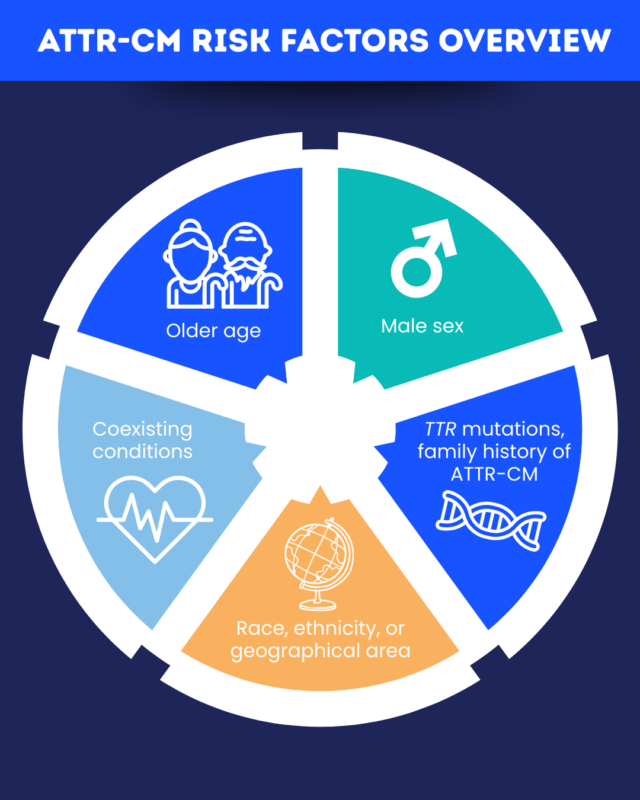
ATTR-CM risk factors may include:
- older age
- male sex
- TTR mutations
- family history of ATTR-CM
- race and ethnicity
- coexisting conditions
The main risk factors for hereditary ATTR-CM are carrying a TTR mutation or having a family history; however, other factors may also influence the likelihood that a person with a TTR mutation will develop symptoms. For example, in individuals with the Val122Ile mutation, the risk of developing symptoms increases with age and in men. Specific mutations may be more common in certain racial and ethnic groups or geographical areas, but the disease overall is most prevalent in people of African descent.
Age and sex are the primary risk factors associated with wild-type ATTR-CM, which typically develops in men older than 70.
Other heart problems, including coronary artery disease and heart valve disease, are common among people with ATTR-CM, in whom they may be associated with poorer outcomes or faster disease progression.
How causes affect treatment and management
While the two forms of ATTR-CM share several characteristics, their required monitoring and care can differ. By understanding the underlying cause of a disease, doctors can more accurately estimate a patient’s prognosis, predict which other symptoms may develop in conjunction with heart problems, and make informed decisions regarding treatment and monitoring.
All medications that are approved for ATTR-CM can be used in adults with either disease type, while liver transplants are a treatment option only in certain forms of hereditary ATTR-CM.
Determining early that ATTR-CM is related to genetic mutations may help family members evaluate their risk with genetic counseling and testing, enabling informed family planning decisions and proactive symptom monitoring for mutation-positive individuals.
Amyloidosis News Today is strictly a news and information website about the disease. It does not provide medical advice, diagnosis, or treatment. This content is not intended to be a substitute for professional medical advice, diagnosis, or treatment. Always seek the advice of your physician or other qualified health provider with any questions you may have regarding a medical condition. Never disregard professional medical advice or delay in seeking it because of something you have read on this website.