ATTR-CM symptoms
 Fact-checked by
 The most common signs of transthyretin amyloid cardiomyopathy (ATTR-CM) are those typically associated with heart failure, although problems in the nervous system or other tissues can also occur.
ATTR-CM is a type of cardiac amyloidosis, a group of diseases in which clumps of misfolded proteins, or amyloid deposits, accumulate in the heart and damage it. In ATTR-CM, the deposits are made of a protein called transthyretin and may also accumulate elsewhere in the body.
Because cardiac ATTR-CM symptoms are variable and often mimic signs of other common heart conditions, it can be difficult to accurately diagnose. However, early recognition and treatment are key to ensuring the best possible long-term outcomes. Red flag symptoms should be monitored closely and promptly brought to the attention of a physician familiar with ATTR-CM.
Common heart symptoms
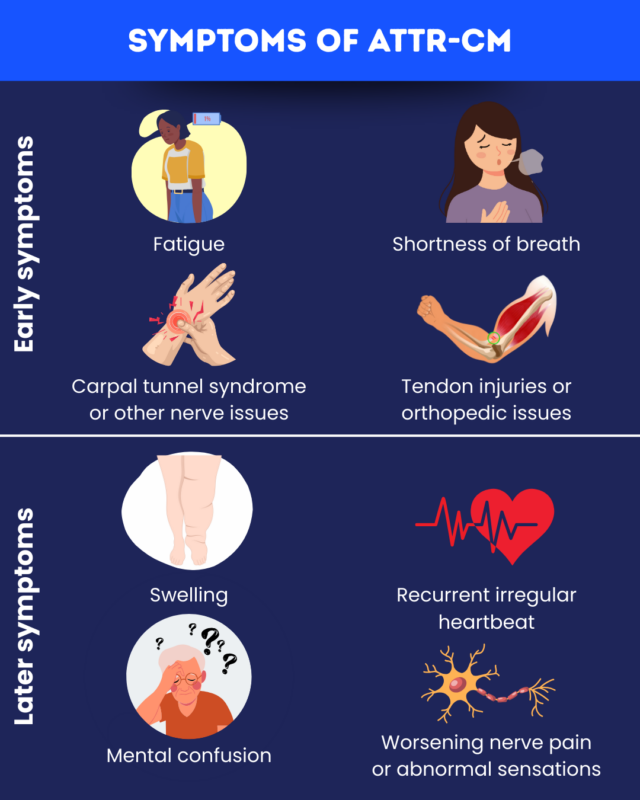
At first, ATTR-CM may not cause any symptoms, or the symptoms may be very subtle. Shortness of breath, even at rest or with little activity, is often an early symptom. Others that may follow include:
- fatigue or weakness
- difficulty exercising
- swelling in legs or ankles, and later, the abdomen
- irregular or fast heart rate
- chest pain or congestion
- coughing or wheezing, especially when lying down
- confusion or trouble thinking
These are typical symptoms of heart failure with preserved ejection fraction (HFpEF), in which the heart muscle is too stiff to relax properly between heartbeats. In ATTR-CM, this happens due to abnormal transthyretin protein buildup, but there are other common causes of HFpEF that can lead to the same stiff heart symptoms.
The heart may lose its ability to pump blood out to the body over time, leading to more substantial heart failure symptoms.
Other symptoms beyond the heart
In some cases, amyloid deposits can also accumulate in other tissues, leading to additional symptoms.
There are two types of ATTR-CM — hereditary (caused by genetic mutations) and wild-type (typically age-related). Wild-type ATTR-CM symptoms are often heart-dominant, but it has become increasingly recognized that other systems can also be affected. Hereditary ATTR-CM symptoms commonly extend to other areas, especially the nervous system.
Peripheral nervous system symptoms
When amyloid deposits accumulate in or around the peripheral nervous system — the nerves outside the brain and spinal cord — it can lead to issues such as:
- peripheral neuropathy, including symptoms of nerve damage, such as pain, tingling, or other abnormal sensations, often in the hands and feet
- carpal tunnel syndrome, characterized by numbness, tingling, pain, or weakness in the hands and forearms due to increased pressure in a nerve running through the wrist
- lumbar spinal stenosis, characterized by pain and numbness in the lower back due to narrowing of the spinal canal
Nerve pain and ATTR-CM can occur together in both disease types, although peripheral neuropathy is generally more prominent in hereditary ATTR-CM. If ATTR amyloidosis symptoms primarily affect the nerves over the heart, this may lead to the diagnosis of a related condition called hereditary ATTR amyloidosis with polyneuropathy.
Early symptoms of cardiac amyloidosis often include these signs of peripheral nervous system involvement, which may occur years before obvious heart symptoms. Researchers have uncovered a strong link between carpal tunnel and amyloidosis, finding that people treated for carpal tunnel are at an increased risk of later being diagnosed with ATTR-CM or another cardiac amyloidosis.
Autonomic nervous system symptoms
ATTR-CM can also affect the autonomic nervous system, which controls involuntary bodily functions. Symptoms may include:
- gastrointestinal problems, such as diarrhea, constipation, or nausea
- feeling full quickly after eating very little, leading to weight loss
- low blood pressure when standing up, leading to dizziness, lightheadedness, or fainting
- erectile dysfunction
- urinary problems
- abnormal sweating
These symptoms are more common in hereditary ATTR-CM.
Other symptoms
Amyloid deposits can sometimes accumulate elsewhere, leading to:
- spontaneous tendon tears, especially in the arms
- eye problems, such as glaucoma
- kidney problems
Red flags that could signal ATTR-CM
Because its cardiac symptoms are nonspecific, an ATTR-CM diagnosis often relies on the recognition of multiple red flags for cardiac amyloidosis such as:
- heart failure symptoms without another obvious cause
- abnormalities on routine heart imaging or blood tests
- poor response to standard heart failure medications
- recurring heart rhythm abnormalities
- intolerance to blood pressure-lowering medications
- carpal tunnel syndrome, particularly when affecting both hands
- a history of spontaneous tendon ruptures, lumbar spinal stenosis, or joint replacement
- symptoms of peripheral neuropathy or autonomic dysfunction
- kidney problems
ATTR-CM may be particularly suspected when red flags are present and in people with disease risk factors, including older age, male sex, or a family history.
When to talk to a doctor
Patients should talk with a doctor anytime unexpected heart or nervous system symptoms arise. A symptom diary can help individuals track all their symptoms, enabling them and their healthcare team to more easily identify potential red flag patterns.
If such patterns are present, a patient should seek input from an experienced cardiologist who will know when to suspect ATTR-CM. A discussion about ATTR-CM testing may be particularly indicated if cardiac symptoms are not resolving with standard heart failure medications.
Individuals with a family history of hereditary ATTR-CM can talk to their provider about genetic counseling and testing, even if they don’t have symptoms, to help assess their risk of ATTR-CM.
Amyloidosis News Today is strictly a news and information website about the disease. It does not provide medical advice, diagnosis, or treatment. This content is not intended to be a substitute for professional medical advice, diagnosis, or treatment. Always seek the advice of your physician or other qualified health provider with any questions you may have regarding a medical condition. Never disregard professional medical advice or delay in seeking it because of something you have read on this website.