Nucresiran for hATTR-PN
 Fact-checked by
 What is nucresiran for hATTR-PN?
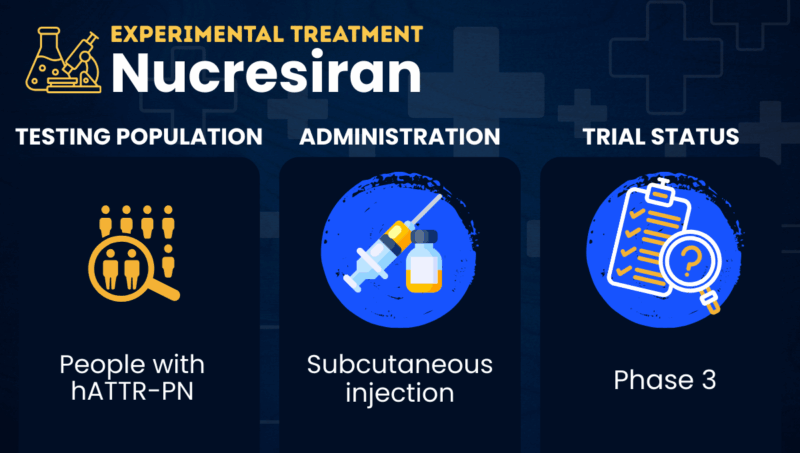
Nucresiran (formerly known as ALN-TTRSC04) is an experimental gene-silencing therapy being tested as a possible treatment for hereditary transthyretin amyloidosis with polyneuropathy (hATTR-PN). It is given via under-the-skin (subcutaneous) injections.
Inherited mutations in the TTR gene, which contains a blueprint for making the protein transthyretin, cause hATTR-PN. These mutations result in the production of an unstable version of transthyretin that is prone to misfolding and accumulating in abnormal clumps, known as amyloid deposits. These deposits mainly form in the peripheral nerves — the nerves outside of the brain and spinal cord — leading to symptoms of nerve damage.
Nucresiran is designed to reduce transthyretin production by silencing the TTR gene. It contains a genetic fragment called a small interfering RNA, which binds to a template molecule needed to make transthyretin from the TTR gene and marks it for destruction. This is expected to lead to lower transthyretin levels, preventing the formation of new amyloid deposits.
Alnylam Pharmaceuticals is the developer of nucresiran, as well as the approved TTR silencers Onpattro (patisiran) — infused into the bloodstream every three weeks — and Amvuttra (vutrisiran), injected subcutaneously every three months. As a next-generation gene-silencing therapy, nucresiran is designed for deeper transthyretin depletion, allowing for less frequent dosing compared with its predecessors, with two injections per year.
Nucresiran is entering Phase 3 testing for hATTR-PN. It is also in Phase 3 testing for transthyretin amyloid cardiomyopathy (ATTR-CM), a related disease that primarily affects the heart.
Therapy snapshot
| Treatment name | Nucresiran |
| Administration | Subcutaneous injection |
| Clinical testing | In Phase 3 testing for hATTR-PN |
How will nucresiran be administered in hATTR-PN?
In a Phase 3 clinical trial, adults with hATTR-PN will receive nucresiran as a subcutaneous injection, at a dose of 300 mg, administered once every six months.
Nucresiran in hATTR-PN clinical trials
A Phase 3 trial called TRITON-PN (NCT07223203) is testing the effectiveness of nucresiran in 125 adults with hATTR-PN. Participants will receive either nucresiran once every six months or Amvuttra once every three months.
The study’s main goal is to assess changes in the Modified Neuropathy Impairment Score +7 — a standard clinical measure of nerve damage and related symptoms — after nine months, compared with an external placebo group from a previous Onpattro clinical trial. The main part of the study will be followed by an open-label extension period during which all participants will receive nucresiran. Top-line results are expected in 2028.
A previous Phase 1 clinical trial (NCT05661916) demonstrated that a single dose of nucresiran resulted in sustained reductions in transthyretin levels. The Phase 3 dose (300 mg) achieved a more than 90% reduction in transthyretin that lasted for six months.
Nucresiran side effects
It isn’t yet known how nucresiran will affect people with ATTR-PN. The Phase 1 healthy volunteer trial reported that the most common potential side effects included:
- upper respiratory tract infection
- headache
- stomach flu
Most of these events were mild, and no participants reported reactions at the injection site or raised other major safety concerns.
Amyloidosis News Today is strictly a news and information website about the disease. It does not provide medical advice, diagnosis, or treatment. This content is not intended to be a substitute for professional medical advice, diagnosis, or treatment. Always seek the advice of your physician or other qualified health provider with any questions you may have regarding a medical condition. Never disregard professional medical advice or delay in seeking it because of something you have read on this website.