hATTR-PN symptoms
 Fact-checked by
 Problems associated with nerve damage are the main symptoms of hereditary transthyretin amyloidosis with polyneuropathy (hATTR-PN). However, because the disease can affect multiple organs and systems in the body, including the heart, clinical manifestations can vary significantly.
Also known as familial amyloid polyneuropathy (FAP), hATTR-PN is a progressive disease caused by the accumulation of misfolded transthyretin (TTR) proteins, which clump together and form toxic amyloid deposits. In hATTR-PN, these deposits mainly accumulate in and damage the peripheral nerves found outside the brain and spinal cord. Mutations in the TTR gene, which provides instructions for making TTR, are the root cause of hATTR-PN.
The age at which hATTR-PN symptoms manifest determines whether a patient has early-onset or late-onset disease. Symptoms and disease progression differ substantially between these two groups. In early-onset disease, the signs of hATTR-PN appear before age 50, whereas in late-onset hATTR-PN, they arise later in life.
Early-onset hATTR-PN is marked by symptoms associated with nerve damage, has a less severe overall disease course, and is associated with a longer survival. Late-onset hATTR-PN has a more aggressive disease course, and cardiomyopathy, or damage to the heart muscle, is more common. In both of these groups, early intervention and hATTR-PN treatment can help slow disease progression, making a timely hATTR-PN diagnosis essential.
Peripheral sensory-motor neuropathy symptoms
Peripheral nerves include motor nerves that control muscle movements and sensory nerves that transmit sensory information such as heat, touch, and pain to the central nervous system, which is composed of the brain and spinal cord. When toxic amyloid deposits accumulate and damage these nerves, they can cause peripheral sensory-motor neuropathy, resulting in a loss of sensation and/or muscle weakness. In people with classical early-onset hATTR-PN, peripheral sensory-motor neuropathy symptoms usually start in the feet and then progress upwards.
Common peripheral neuropathy symptoms include:
- paresthesia, or numbness and tingling
- inability to sense temperature changes, limb position, or movement
- walking difficulty and muscle weakness
- neuropathic pain, which may manifest as:
- dysesthesia, or unusual or painful sensations when touching something
- allodynia, or excessive pain response to stimuli that are not usually painful
- hyperalgesia, or exaggerated pain responses to a painful stimulus
- spontaneous pain in the feet
Autonomic neuropathy symptoms
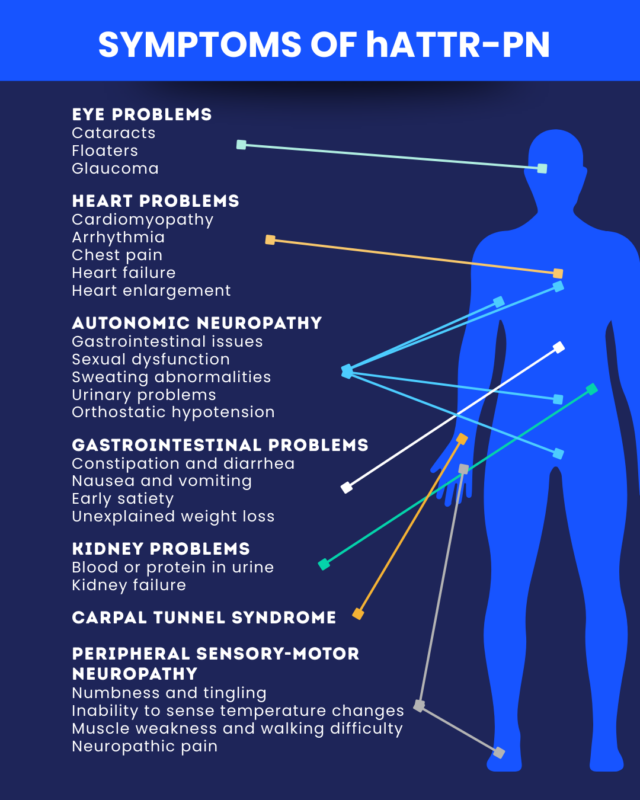
The autonomic nervous system is the part of the peripheral nervous system that controls involuntary bodily functions, such as digestion, sweating, heart rate, blood pressure, and breathing. Autonomic neuropathic symptoms caused by damage to the peripheral nerves controlling these involuntary actions may be among the early signs of hATTR-PN and can include:
- gastrointestinal issues, such as constipation and diarrhea
- sexual dysfunction, including erectile dysfunction in men
- sweating abnormalities, including excessive sweating and inability to sweat
- urinary problems, such as difficulty emptying the bladder and recurrent urinary tract infections due to urine retention
- orthostatic hypotension, referring to a sharp drop in blood pressure when standing that can cause dizziness and lightheadedness
- dry eyes and mouth
Other symptoms
The buildup of amyloid deposits in other tissues and organs may lead to a range of symptoms. When it happens in the heart, it can cause muscles to thicken and stiffen, preventing the heart from pumping blood effectively and resulting in various heart symptoms, such as
- arrhythmia, or an abnormal heart rhythm
- regurgitation, or a backward flow of blood caused by leaky heart valves
- conduction disorders driven by a disruption of electrical signals that control heart rate and rhythm
- chest pain
- fatigue
- shortness of breath
- swelling in the legs
- heart enlargement
- heart failure
Amyloid deposits may also accumulate in the kidneys, eyes, gastrointestinal system, and musculoskeletal system, causing:
- cataracts
- vitreous opacities or floaters
- glaucoma
- kidney failure
- hematuria, or blood in the urine
- proteinuria, or large amounts of protein in the urine
- nausea and vomiting
- early satiety
- unexplained weight loss
- carpal tunnel syndrome, in which pressure on a nerve running through the wrist causes numbness and weakness in the hand and fingers
- lumbar stenosis, or narrowing of the spinal canal
Less common symptoms
Less commonly, amyloid deposits may accumulate in parts of the central nervous system, particularly the meninges — the membranes covering the brain and spinal cord — and small blood vessels in the brain, which can cause:
- stroke or stroke-like episodes
- seizures
- epilepsy
- bleeding in the brain
- cognitive impairment
- hydrocephalus, or fluid buildup in the brain
- progressive dementia
Symptoms by TTR mutation
More than 150 different TTR mutations have been identified to date. Each of them is associated with a unique set of disease features, including age of onset, disease progression, and extent of heart and nerve involvement.
The most common hATTR-PN-causing mutation is called Val30Met and is mainly associated with peripheral nerve involvement. Other mutations, such as Val122Ile or Leu111Met, are mostly associated with heart problems. Most known TTR mutations can lead to a mixed set of nerve and cardiac manifestations, which are highly variable even among people carrying the same mutation.
Amyloidosis News Today is strictly a news and information website about the disease. It does not provide medical advice, diagnosis, or treatment. This content is not intended to be a substitute for professional medical advice, diagnosis, or treatment. Always seek the advice of your physician or other qualified health provider with any questions you may have regarding a medical condition. Never disregard professional medical advice or delay in seeking it because of something you have read on this website.