Coramitug for ATTR-CM
 Fact-checked by
 What is coramitug for ATTR-CM?
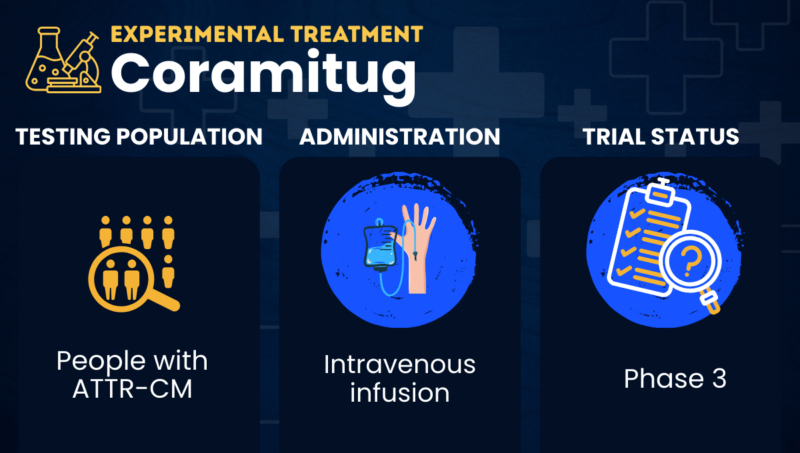
Coramitug (previously known as NNC6019 and PRX004) is an experimental, antibody-based therapy being developed as a possible treatment for transthyretin amyloid cardiomyopathy (ATTR-CM). It is given via intravenous, or into-the-vein, infusions.
ATTR-CM occurs when the protein transthyretin becomes unstable due to genetic mutations (hereditary ATTR-CM) or age-related changes (wild-type ATTR-CM). The unstable protein misfolds and forms clumps, known as amyloid deposits, in the heart, causing damage.
While currently available therapies aim to prevent new amyloid buildup, none can clear existing amyloid deposits that have already formed. Coramitug seeks to fill this therapeutic gap by promoting the clearance of amyloid deposits while also preventing further transthyretin accumulation.
The therapy is designed to bind to the misfolded version of transthyretin found in the amyloid deposits, marking it for removal by the immune system. This specifically targets the disease-driving protein while leaving stable, functional transthyretin unaffected.
Initially developed by Prothena, the therapy is currently being developed by Novo Nordisk and is now being tested for ATTR-CM in a Phase 3 clinical trial. Regulators in the U.S. and European Union have granted coramitug orphan drug status for ATTR-CM to help accelerate the development of treatments for rare diseases.
Therapy snapshot
| Treatment name | Coramitug |
| Administration | Intravenous infusion |
| Clinical testing | Currently in Phase 3 testing for ATTR-CM |
How will coramitug be administered in ATTR-CM?
Clinical trials have tested coramitug as an intravenous infusion delivered once every four weeks. A Phase 2 study involving people with ATTR-CM tested doses of 10 mg/kg and 60 mg/kg. The dose being tested in ongoing Phase 3 studies hasn’t been publicly recorded.
Coramitug in ATTR-CM clinical trials
Early clinical trials have demonstrated the potential benefits of coramitug in people with ATTR-CM.
- A small Phase 1 study (NCT03336580) found that heart function was stabilized or improved in people with hereditary forms of transthyretin amyloidosis, including hereditary ATTR-CM and transthyretin amyloidosis with polyneuropathy, after nine months of coramitug. Symptoms of nerve damage were also stable.
- A subsequent Phase 2 study (NCT05442047) found that a high monthly dose of coramitug (60 mg/kg) significantly reduced levels of a biomarker of heart damage compared with a placebo after a year of treatment among people with hereditary or wild-type ATTR-CM, but failed to significantly improve exercise capacity. Measures of heart structure and function also tended to improve with coramitug. An open-label extension study (NCT06260709) in which all participants will receive coramitug is ongoing.
Based on these results, Coramitug is now being tested in a Phase 3 trial called CLEOPATTRA (NCT07207811), which will include approximately 1,280 adults with ATTR-CM (about 15% hereditary and 85% wild-type). All particpants will be randomly assigned to receive monthly infusions of coramitug or a placebo along with standard-of-care treatment.
The primary goal is to evaluate rates of death and recurrent clinical events related to cardiovascular complications over about four years of treatment. Secondary outcomes include patient-reported measures, exercise capacity, and biomarkers of heart damage.
Coramitug side effects
In the Phase 2 trial involving people with hereditary or wild-type ATTR-CM, the most common side effects included:
- shortness of breath
- fatigue
- cough
- heart failure
- abnormal heart rhythms
A number of these are common symptoms of ATTR-CM and would be expected in this population. Most of them occurred at similar rates in the placebo group.
Additional data from the ongoing Phase 3 trial will provide more information about the side effects of Coramitug in ATTR-CM.
Amyloidosis News Today is strictly a news and information website about the disease. It does not provide medical advice, diagnosis, or treatment. This content is not intended to be a substitute for professional medical advice, diagnosis, or treatment. Always seek the advice of your physician or other qualified health provider with any questions you may have regarding a medical condition. Never disregard professional medical advice or delay in seeking it because of something you have read on this website.