ATTR-CM diagnosis
 Fact-checked by
 A diagnosis of transthyretin amyloid cardiomyopathy (ATTR-CM) is typically reached through a series of tests to identify signs of the disease and rule out related disorders.
ATTR-CM is a type of heart amyloidosis, a group of diseases in which unstable proteins — in the case of ATTR-CM, the protein transthyretin (TTR) — form clumps called amyloid deposits in the heart, disrupting its function.
Reaching a diagnosis of heart amyloidosis can be challenging; however, early detection of ATTR-CM is vital because treatment tends to be most successful when started promptly.
When to suspect ATTR-CM
Symptoms of ATTR-CM vary broadly and may mimic those of other heart diseases, complicating the diagnosis. Red flags that may raise suspicion of ATTR-CM include:
- a family history of ATTR-CM
- heart problems with no clear cause
- a poor response to standard heart failure treatments
- signs of nervous system involvement
- a history of musculoskeletal issues, such as tendon ruptures or joint replacements
If several signs of ATTR-CM are present, physicians may order a number of other transthyretin amyloid cardiomyopathy tests.
Initial evaluation
A primary care provider or cardiologist may first order standard noninvasive assessments of heart structure and function. These may include:
- echocardiography, called an echo, or a heart ultrasound, to visualize the beating heart
- electrocardiography, known as an ECG, to monitor the electrical activity of the heart
These tests can show cardiac changes consistent with ATTR-CM. For example, an echo can detect thickening of the walls of the heart, which occurs in ATTR-CM when amyloid deposits infiltrate the heart muscle. Meanwhile, an ECG can detect abnormalities in heart rhythms.
Tests that confirm an ATTR-CM diagnosis
The abnormalities detected in an echo or ECG are usually not specific to ATTR-CM. A combination of the following tests may help establish the diagnosis:
- blood and urine tests
- scintigraphy of the heart
- cardiac MRI
- tissue biopsy
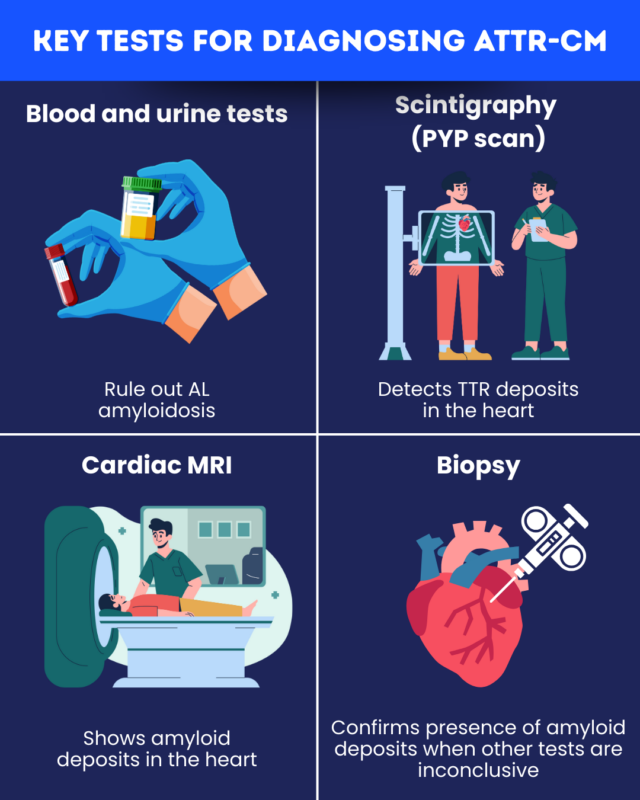
Blood and urine tests are used to rule out amyloid light-chain (AL) amyloidosis, another type of heart amyloidosis.
Scintigraphy is the standard test to detect amyloid deposits in the heart. The most common version of the procedure, called a PYP scan, involves injecting into the body a radioactive tracer molecule that binds strongly to TTR amyloid deposits, but not AL deposits. The tracer is then visualized with a specialized camera.
If a PYP scan for ATTR-CM is not definitive, a cardiac MRI may be done to also help visualize amyloid buildup, although it can’t reliably distinguish between AL and TTR deposits.
Most ATTR-CM diagnoses rely solely on these noninvasive techniques. In inconclusive cases, however, a tissue biopsy for ATTR-CM may be performed. This involves collecting a small tissue sample from fat, bone marrow, or heart muscle, and examining it under a microscope for signs of amyloid deposits.
Genetic testing
Once ATTR-CM is confirmed, genetic testing is used to differentiate between the two main forms of the disease. Hereditary, or familial, ATTR-CM is passed down in families through inherited genetic mutations in the TTR gene, while wild-type ATTR-CM is unrelated to genetic mutations.
With ATTR-CM genetic testing, a small sample of blood or saliva is screened for known mutations in the TTR gene. If one is present, it confirms hereditary ATTR-CM. In such cases, relatives of the affected patient may want to seek genetic testing to evaluate their own risk of developing the disease or passing the mutations to their children.
Genetic counseling can help patients understand their test results and next steps, including options for family planning and family member testing.
Understanding the timeline
The ATTR-CM diagnostic process typically involves:
- Noticing signs and symptoms of ATTR-CM.
- Initial assessments of heart structure and function (echo and ECG).
- Blood or urine tests to rule out AL amyloidosis.
- PYP scans to establish the diagnosis (with cardiac MRI and tissue biopsy as needed).
- Genetic testing to determine the underlying cause.
Depending on clinical suspicion of ATTR-CM and test availability, these steps may overlap or occur in a different order.
Misdiagnoses and diagnostic delays are common because the disease is often mistaken for other heart problems. Common misdiagnoses include:
- heart diseases that also cause abnormally thick or stiff heart muscles, such as hypertrophic cardiomyopathy or restrictive cardiomyopathies
- other types of cardiac amyloidosis
- lysosomal storage disorders, such as Fabry disease characterized by abnormal protein accumulation that can affect the heart
Patients and caregivers can advocate for a prompt diagnosis by:
- monitoring symptoms and reporting them to primary care physicians
- compiling questions before medical visits
- asking about genetic testing if there’s a family history of hereditary ATTR-CM
- requesting a referral to a cardiologist familiar with amyloidosis or a specialized amyloidosis center
Next steps after diagnosis
After confirming an ATTR-CM diagnosis, individuals may be referred to a cardiologist or to amyloidosis care centers with the expertise to help patients understand their treatment options. Those options may include symptom management, disease-modifying therapies, and lifestyle changes.
Symptom monitoring remains crucial after an ATTR-CM diagnosis. Patients should meet regularly with their care team and promptly report any changes in their symptoms.
It’s also important for patients and caregivers to find emotional and practical support while navigating the challenges of life with a progressive heart disease. This may include:
- counseling or therapy
- support groups
- community organizations, such as the Amyloidosis Foundation or the Amyloidosis Research Consortium
Amyloidosis News Today is strictly a news and information website about the disease. It does not provide medical advice, diagnosis, or treatment. This content is not intended to be a substitute for professional medical advice, diagnosis, or treatment. Always seek the advice of your physician or other qualified health provider with any questions you may have regarding a medical condition. Never disregard professional medical advice or delay in seeking it because of something you have read on this website.